MetaMask swap fees is a quote-level cost bundle for gas, routing, and service charges
Metamask swap fees is the total cost shown when MetaMask Swaps prepares a token trade: network gas, the price impact of the route, slippage settings, and MetaMask's 0.875% service fee. The wallet searches aggregated liquidity sources, returns a quoted output amount, and asks the user to approve the onchain transaction. Gas goes to the blockchain network; the service fee is part of the swap route.
The line items inside a MetaMask swap quote
A swap quote joins several costs that feel like one number at confirmation time. The most visible charge is gas, paid in the native asset of the selected network. On Ethereum, Base, Arbitrum, and Optimism that asset is ETH. On Polygon it is POL, on BNB Smart Chain it is BNB, and on Avalanche C-Chain it is AVAX. The wallet estimates that cost before the transaction is sent.
The second cost is the service fee attached to MetaMask Swaps. Metamask swap fees also reflect route pricing from decentralized exchanges, market makers, and aggregators. If the route crosses a pool with thin liquidity, the quoted amount worsens even when gas looks cheap. A low gas network still creates an expensive trade when the token pair has poor depth.
- Network gas pays validators or sequencers for processing the transaction.
- The MetaMask service fee is included in the swap quote.
- Price impact comes from pool liquidity and order size.
- Slippage tolerance controls how far execution may move.
- Token approvals create a separate transaction for many ERC-20 assets.
How aggregated routing changes the final token amount
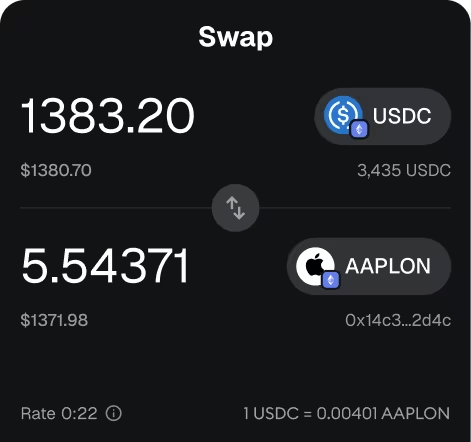
MetaMask Swaps acts as an aggregator inside the wallet. It requests routes from connected liquidity sources and presents a trade that balances output amount, gas, and execution reliability. The route might use a single decentralized exchange pool, split across venues, or use an aggregator path that finds deeper liquidity. The user sees the proposed input and estimated output before signing.
This is where Metamask swap fees differ from a plain transfer. Sending ETH from one address to another spends gas only. Swapping ETH for USDC, SHIB, LINK, UNI, or another token requires a smart contract call that exchanges assets through liquidity. That contract call carries a higher gas estimate than a transfer and exposes the trade to market movement before the transaction confirms.
Gas spikes, busy blocks, and small trade pain
Network conditions decide whether gas is mild or painful. A swap on Ethereum during a crowded block costs far more than the same route during a quiet period, because blockspace is auctioned through transaction fees. Layer 2 networks reduce this pressure, yet they still charge execution fees and sometimes an additional data cost tied to settlement on Ethereum.
Small trades feel the pressure first. A $7 gas charge on a $25 swap destroys the economics, while the same gas charge on a larger rebalance has a smaller proportional effect. Metamask swap fees should be read against trade size, not as a standalone percentage. The quote screen gives the necessary numbers before the wallet asks for a signature.
Approvals before swaps and why they matter
Many token swaps begin with an approval. ERC-20 tokens use allowances, so a contract needs permission to spend the token from the wallet before it executes the exchange. If the token has never been approved for that route, MetaMask prompts for an approval transaction first. That approval spends gas even though it does not complete the actual swap.
Once the approval confirms, the swap transaction follows. Some users mistake this sequence for a duplicate fee because two confirmations appear back to back. The first transaction grants spending permission; the second performs the trade. For Metamask swap fees, approvals matter because they turn a first-time swap into a two-step cost event.
Reading the quote before signing
The strongest habit is to inspect the quote line by line before approving the transaction. The input amount, estimated output, gas estimate, slippage tolerance, and route details together explain the real trade. A swap that looks acceptable by token price alone becomes unattractive if the gas estimate is high or the minimum received amount is far below the expected output.
Slippage deserves special attention with volatile tokens and thin pools. A tight slippage setting blocks execution when the market moves beyond the limit. A loose setting lets the transaction complete at a worse price. MetaMask shows the minimum received amount so the user knows the lower boundary of the execution before signing.
Where this cost model fits in normal wallet use
The fee structure makes the most sense for wallet-native trading. Someone holding ETH who wants USDC on the same network avoids opening a separate trading interface, connecting to a new app, and comparing routes by hand. The wallet keeps the swap flow close to the account, token list, activity history, and transaction controls.
Importantly, Metamask swap fees also fit rebalancing across common assets, preparing gas assets for DeFi use, moving from a volatile token into a stablecoin, or converting reward tokens into ETH. The convenience is strongest when the user values route aggregation and wallet-level confirmation over manually shopping across several exchanges.
When direct DEX routes or centralized exchanges cost less
Uniswap, Curve, Balancer, 1inch, and CoW Swap remain useful alternatives for users who want more direct control over routes, limit-style execution, specialized pools, or advanced settings. A centralized exchange such as Coinbase, Kraken, or Binance fits users who prefer order books, fiat rails, and account-based custody. Each option carries a different mix of trading fee, withdrawal fee, spread, custody model, and network cost.
In practice, Metamask swap fees are easiest to justify when the quoted output is competitive after gas and service charges. A direct DEX route wins when it provides a better net output for the same pair. A centralized exchange wins when the user already holds funds there and the exchange spread plus withdrawal cost beats the onchain route.
Getting a cleaner first swap
Start with the network that already holds the token and the native gas asset. If USDC is on Base, swapping it on Ethereum requires a bridge first, which adds another transaction and another cost layer. Keeping the trade on the same supported network removes that extra step and makes the quote easier to understand.
A first-time user should test the flow with a modest amount, confirm that the receiving token appears in the wallet, and keep extra native gas for follow-up actions. Running the wallet balance down to zero leaves no room to speed up, cancel, bridge, or move funds later. Metamask swap fees become easier to manage when the account always keeps a small gas reserve.
The practical value of seeing costs before execution
The best feature of the swap screen is not that it removes cost; it makes the major cost drivers visible before the transaction is signed. Gas, service fee, output estimate, route, and minimum received appear before funds move. That visibility matters because onchain transactions settle by code, and a confirmed swap cannot be undone through a customer service request.
Notably, Metamask swap fees belong to the broader tradeoff of self-custodied crypto. The wallet gives direct control over assets, networks, approvals, and dapp connections, while the user decides whether the quoted exchange rate is worth signing. Used with patience, the swap tool turns a complex DeFi routing task into a readable wallet action with clear transaction prompts.
Metamask swap fees FAQ
Does the quoted amount include the MetaMask service fee?
Yes. The MetaMask Swaps quote includes the service fee inside the proposed route, while network gas appears as a separate transaction cost before signing. The output amount already reflects the route price and service fee. Gas is paid in the native asset of the selected network, so the wallet must hold enough ETH, POL, BNB, or another gas token to submit the transaction.
Which token pays gas during a MetaMask swap?
Gas is paid with the native asset of the network where the swap runs. Ethereum, Base, Arbitrum, and Optimism use ETH for gas. Polygon uses POL, BNB Smart Chain uses BNB, and Avalanche C-Chain uses AVAX. The token being swapped does not replace the need for native gas unless the specific network and account setup supports a sponsored transaction flow.
Is a token approval charged separately from the swap?
An approval is a separate onchain transaction for many ERC-20 tokens, so it has its own gas cost. The approval gives the swap contract permission to spend a specific token from the wallet. After that approval confirms, the actual swap needs another confirmation and another gas payment. Native assets such as ETH do not use the same ERC-20 approval step.
When is it cheaper to swap on a layer 2 network?
A layer 2 network is cheaper when the token already lives there and the route has enough liquidity. Base, Arbitrum, Optimism, and other scaling networks reduce execution costs compared with Ethereum mainnet during busy periods. Bridging only to chase lower gas adds another fee and waiting period, so the total cost must include the bridge transaction as well as the swap.
Why do small MetaMask swaps feel expensive?
Small swaps feel expensive because gas is mostly fixed for the transaction size rather than proportional to the trade value. A few dollars of gas overwhelms a very small swap, even when the service fee percentage is modest. Thin liquidity adds another drag through price impact, especially for newly launched or lightly traded tokens.