MetaMask swap is an in-wallet exchange route finder for aggregated token quotes
Metamask swap is an in-wallet way to exchange crypto tokens while keeping custody in the MetaMask wallet. It pulls quotes from aggregated liquidity sources across major networks, shows the expected output before signing, and lets the user review gas, price impact, and route details from the same wallet screen. The main appeal is convenience: swapping ETH, USDC, POL, or other supported assets happens without moving funds to a centralized exchange.
Where the swap flow starts inside the wallet
The flow begins from an account that already holds the token used for payment and the network gas token required to submit the transaction. On Ethereum, that gas asset is ETH. On Polygon, it is POL. On BNB Smart Chain, it is BNB. The wallet displays the selected network, token balances, and the account address before the quote is requested, which matters because every quote is tied to a chain and a wallet state.
Once the user chooses the token to sell and the token to receive, Metamask swap requests pricing from multiple services behind the scenes. The screen then presents a quote with the input amount, estimated output, network fee, and approval step if the token has not already been approved for spending. This keeps the key decision points close together instead of spreading them across several decentralized exchange tabs.
How quote aggregation changes the rate a user sees
Token prices across decentralized exchanges differ because liquidity sits in separate pools. A USDC to ETH trade on Uniswap, Curve, or other liquidity venues produces different output when pool depth, routing, and gas costs are included. Aggregation compares available paths and selects a quote designed to improve the received amount after execution costs.
Metamask swap is strongest when a trade has several viable liquidity paths. A common pair such as ETH to USDC on Ethereum or USDC to WETH on Arbitrum has deep markets and competing routes. A thin, newer token has fewer routes, wider price impact, and a greater chance of a stale or unfavorable quote. The wallet experience does not remove market structure; it packages the route search into a clearer review step.
Networks and tokens that fit the feature
More broadly, MetaMask supports many EVM-compatible networks, and its swap feature is associated with major chains where decentralized exchange liquidity is active. Ethereum remains the most recognizable environment, while Arbitrum, Optimism, Polygon, Avalanche, and BNB Smart Chain are familiar choices for lower-cost or faster activity. Exact availability changes as networks and providers evolve, so the token selector inside the wallet is the working source for what an account can trade at that moment.
Stablecoins, wrapped native assets, and blue-chip DeFi tokens create the cleanest experience. USDC, USDT, DAI, ETH, WETH, WBTC, and network-native gas assets appear frequently in swap routes because they anchor liquidity. Long-tail tokens require extra attention to contract addresses, decimals, pool depth, and approvals. Metamask swap helps expose these details during review, but it does not turn an illiquid token into a liquid market.
Reading the quote before signing
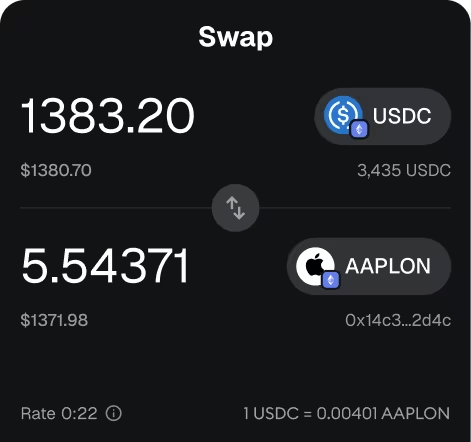
A swap quote is more than a token price. It contains the amount received, allowed slippage, estimated gas, route details, and sometimes a separate token approval transaction. The estimated output is the number most people notice first, yet the final decision should include the gas cost and price impact because those two items decide whether a small swap is worth sending onchain.
Before confirming Metamask swap, check these parts of the review screen:
- The selected network and account match the assets being traded.
- The token contract matches the asset the user intended to receive.
- The estimated output is acceptable after gas and route costs.
- The slippage setting fits the token's liquidity and volatility.
- The approval request grants only the level of access the user accepts.
Approvals deserve special attention. Selling an ERC-20 token often requires permission before the swap contract spends it. Some wallets and dapps request broad allowances for convenience, while more limited approvals reduce future exposure. The best choice depends on repeat usage and the user's tolerance for approving again later.
Why gas still matters when the rate looks attractive
Every onchain swap needs a transaction, and that transaction competes for block space. Ethereum mainnet gas rises when activity is heavy, so a quote that looks favorable can become inefficient for a small trade. Layer 2 networks such as Arbitrum and Optimism reduce execution cost for many swaps, while Polygon and BNB Smart Chain use different fee markets and gas tokens.
Day to day, Metamask swap shows network fees before confirmation, which lets the user compare the trade size against the cost of execution. A large ETH to USDC transaction absorbs gas more easily than a small experimental trade. On cheaper networks, route quality and token liquidity become the larger concerns because the gas line takes up less of the total cost.
Using it for routine portfolio moves
Many users rely on wallet-based swaps for ordinary portfolio maintenance: changing ETH into USDC after a gain, acquiring a gas token for another activity, moving from a volatile asset into a stablecoin, or buying a DeFi token before interacting with a protocol. The wallet context is useful because the swap happens near the same place where the user connects to dapps, views balances, and signs transactions.
Importantly, Metamask swap also suits moments when a centralized exchange withdrawal would slow the process. If funds already sit in the wallet on the right network, an onchain quote reaches available liquidity directly. The user still pays network fees and accepts smart-contract execution risk, but there is no deposit address, exchange order book, or offchain withdrawal queue involved in the trade path.
When a bridge or centralized exchange fits better
A swap changes one token into another on a selected network. It does not automatically move assets from Ethereum to Arbitrum or from Polygon to Avalanche. When the goal is cross-chain movement, a bridge or a cross-chain routing service is the more relevant tool. Confusing swaps with bridging leads to the wrong asset appearing on the wrong network, especially when wrapped tokens share a similar symbol.
Centralized exchanges still make sense for fiat cash-out, large order books, tax reporting exports, and account-level trading tools. Decentralized exchanges such as Uniswap, Curve, and 1inch also remain useful for users who want to inspect pools, manually tune slippage, or select a specific route. Metamask swap is the simpler wallet-native path when convenience, custody, and a consolidated quote screen matter more than manual routing control.
Common friction points after confirmation
After a transaction is submitted, the wallet shows pending, confirmed, or failed status based on the chain's response. A failed swap consumes gas because validators still processed the transaction attempt. The usual reasons are slippage exceeded, insufficient gas, a price moving before execution, or an approval missing from the sequence. Waiting for the current transaction to finish before submitting another one prevents nonce conflicts.
Sometimes the received token does not appear in the asset list immediately. Adding the token contract to the wallet view fixes display issues when the transaction succeeded onchain. If the quote expired before signing, refreshing it produces a current route and updated gas estimate. Metamask swap depends on live liquidity, so stale screens should be treated as old information rather than a firm price.
Security details that belong in the swap routine
In practice, MetaMask emphasizes self-custody, privacy-first controls, security alerts, threat monitoring, and tools such as Transaction Shield and Wallet Guard in its broader wallet experience. Those protections strengthen the review process, but signing remains the moment where the user authorizes the action. The safest routine is concrete: confirm the network, contract, approval, output amount, and destination account before the wallet signature is sent.
Notably, Metamask swap works best as part of a disciplined wallet habit. Keep the recovery phrase offline, separate high-value holdings from frequent dapp activity, revoke unused allowances when they are no longer needed, and pause when a token contract or quote looks unfamiliar. These steps address the risks that matter most for wallet-based trading: bad tokens, excessive approvals, phishing prompts, and rushed signatures.
Common questions about Metamask swap
Can I swap tokens without holding the network gas token?
A wallet needs the correct gas token on the selected network before it sends a swap transaction. ETH pays gas on Ethereum and many Layer 2 networks, POL pays gas on Polygon, and BNB pays gas on BNB Smart Chain. Holding only the token being sold is not enough when the account lacks the asset required to submit the transaction.
Which tokens are easiest to trade through the MetaMask wallet swap screen?
The easiest trades use liquid assets with active markets on the selected network. ETH, WETH, USDC, USDT, DAI, WBTC, and major network gas tokens tend to have deeper routing options than newly launched or thinly traded tokens. Liquidity matters because it affects price impact, route quality, and the chance that the quoted output still holds when the transaction executes.
Why does the final received amount differ from the first quote?
The displayed amount changes when liquidity, gas prices, or token prices move between quote refresh and transaction execution. Slippage settings define how much movement the user accepts before the swap fails. Thin tokens and volatile markets create wider differences than stablecoin pairs or deep ETH routes. Refreshing the quote before signing gives the wallet current route data.
What fees are included in a Metamask swap quote?
A quote includes the network gas fee and the swap cost built into the route shown in the wallet. Gas pays validators or sequencers for processing the transaction. The route price reflects available liquidity, price impact, and any service fee included by the wallet feature. The amount received on the review screen is the key number to compare against the input token and gas cost.